Assembly jigs
34.5mm
Adapter for drawer slide alignment jig; useful as geometry/pricing test.
- Fit
- test only
- File
- drawer-slide-alignment-jig-adapter-01-34-5mm.stl

3D printed parts library
Internal staging library of practical 3D printed sample parts for estimator testing, material checks and quote-flow review.
Use instant pricing for suitable DXF, DWG and vector PDF files with real cut lines, or talk to the team when the job needs process advice.
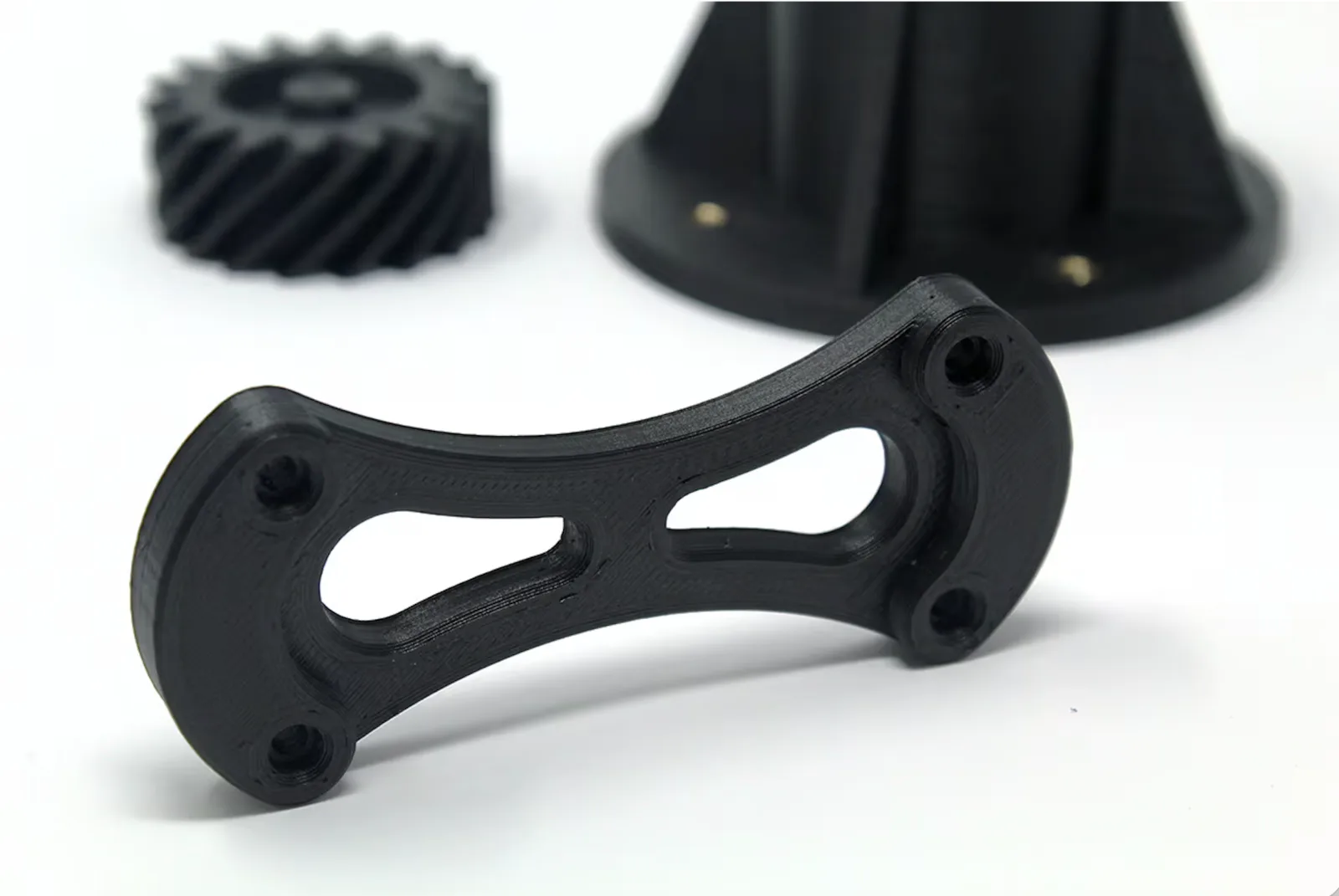
Internal 3D parts test library
This staging library lets the team test cable clips, spacers, jigs, enclosures, trays and workshop aids through the same customer quote flow. Choose a sample, then adjust material, quality, infill and quantity above.
Adapter for drawer slide alignment jig; useful as geometry/pricing test.
Small/large cable clip for low-voltage wires.
Small/large cable clip for low-voltage wires.
PVC drilling jig. Internal stress test only; not a library candidate without permission.
Complex self-centering drill jig/chuck; good stress test, avoid public strength claims.
Complex self-centering drill jig/chuck; good stress test, avoid public strength claims.
Complex self-centering drill jig/chuck; good stress test, avoid public strength claims.
Complex self-centering drill jig/chuck; good stress test, avoid public strength claims.
Complex self-centering drill jig/chuck; good stress test, avoid public strength claims.
Complex self-centering drill jig/chuck; good stress test, avoid public strength claims.
Angled drilling jig; review-only category if used publicly.
PETG handle design; useful geometry test, avoid strength claims.
Simple glue-on replaceable label holder.
Small Arduino/macro project box, useful enclosure benchmark.
Small Arduino/macro project box, useful enclosure benchmark.
Small Arduino/macro project box, useful enclosure benchmark.
Small Arduino/macro project box, useful enclosure benchmark.
Small Arduino/macro project box, useful enclosure benchmark.
Small Arduino/macro project box, useful enclosure benchmark.
Inside corner radius router tool/template.
Custom-length standoff spacers.
Custom-length standoff spacers.
Small simple spacer for generic pricing/geometry test.
Metric undivided bin sizes; good tray pricing benchmark.
Metric undivided bin sizes; good tray pricing benchmark.
Metric undivided bin sizes; good tray pricing benchmark.
Metric undivided bin sizes; good tray pricing benchmark.
Metric undivided bin sizes; good tray pricing benchmark.
Metric undivided bin sizes; good tray pricing benchmark.
Metric undivided bin sizes; good tray pricing benchmark.
Metric undivided bin sizes; good tray pricing benchmark.
Metric undivided bin sizes; good tray pricing benchmark.
Metric undivided bin sizes; good tray pricing benchmark.
Metric undivided bin sizes; good tray pricing benchmark.
Metric undivided bin sizes; good tray pricing benchmark.
Metric undivided bin sizes; good tray pricing benchmark.
Metric undivided bin sizes; good tray pricing benchmark.
Metric undivided bin sizes; good tray pricing benchmark.
Metric undivided bin sizes; good tray pricing benchmark.
Instant 3D printing quote pilot
Upload an STL, choose the material and get a practical budget range in millimetres. Simple files can move quickly; advanced materials, awkward geometry and finish-critical work stay reviewed before acceptance.
Budget range
Upload an STL file to calculate a first-pass budget range.
Estimate details
3D print setting
Large model viewer
Quote confidence
The browser estimator gives a fast starting range for simple STL files. Production acceptance still checks the real file, print orientation, material behaviour, support strategy, finish expectations, schedule and whether the job should move through reviewed quoting instead.
No upload leaves the browser in this pilot, so customers can quickly test whether a simple part is likely to be viable.
The public tool checks the model against internal size and material rules before suggesting a range, without exposing production machines to the customer.
Advanced materials, support-heavy models, long prints, high quantities and finish-sensitive jobs stay reviewed.
The production integration can later use real print-time and support data behind the same customer-friendly workflow.
Simple STL files can start with a browser-based instant budget estimate when the model fits the current material and size rules. Complex, advanced-material, support-heavy or production-critical jobs should be reviewed before acceptance.
The first pilot uses STL files and assumes millimetres. STEP, 3MF and OBJ files should go through reviewed quoting until the slicer-backed quote engine is connected.
3D printing material guide
Pick the material around how the part will be used: prototype, jig, cover, display form or reviewed technical aid. We choose the production route, orientation and support strategy internally, then review anything that needs judgement before acceptance.
Clean first choice for prototypes, form checks, display parts, patterns, low-risk jigs and visual samples where speed and price matter.
A good general-purpose choice for tougher covers, guards, brackets, workshop aids and parts that need more practical resilience than PLA.
Use for selected signage features, display parts and exterior-facing prototypes where UV exposure may matter. Size, warping and finish need review.
A tougher technical material path for selected prototypes, housings and fixtures when the geometry suits FDM printing and expectations are checked.
Carbon-filled PET path for stiff jigs, checking fixtures and production aids where the goal is stability rather than a decorative finish.
A serious reviewed path for robust jigs, guides, brackets and engineering-style aids. It needs dry material handling, size checks and reviewed acceptance.
3D printing project gallery
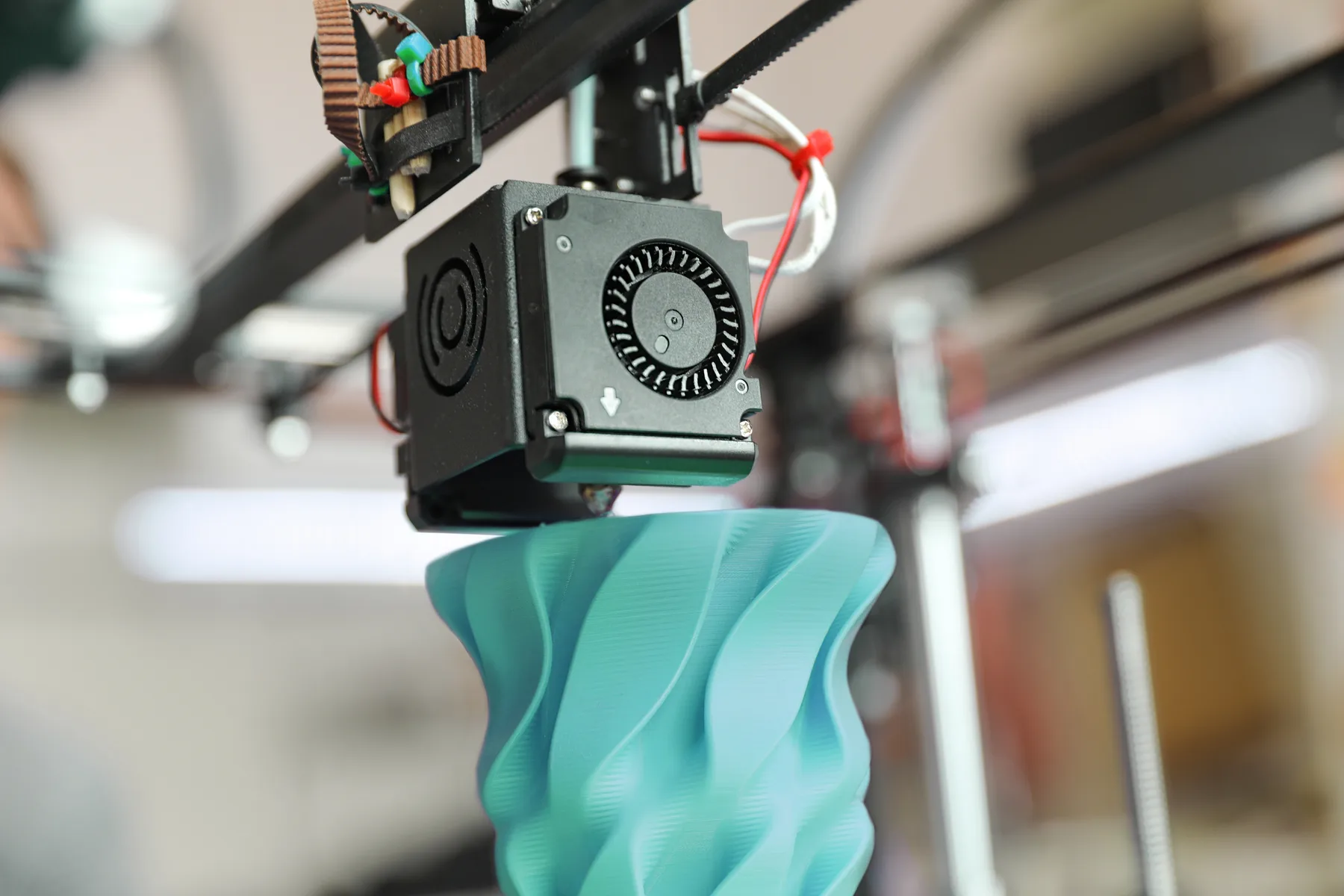
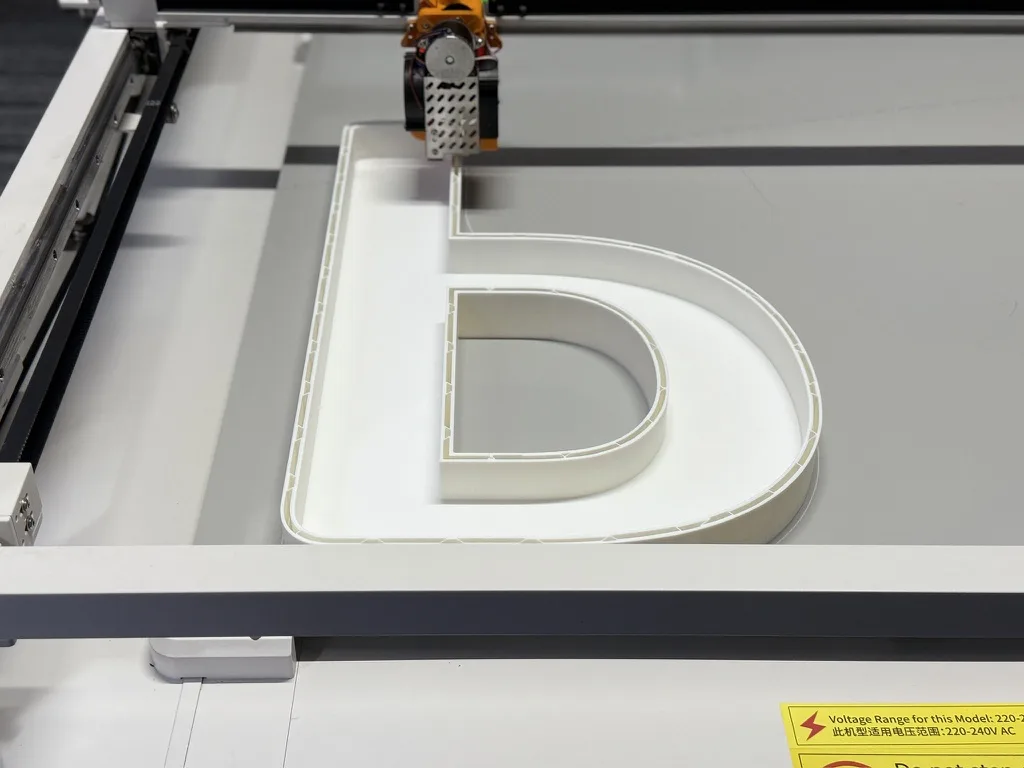
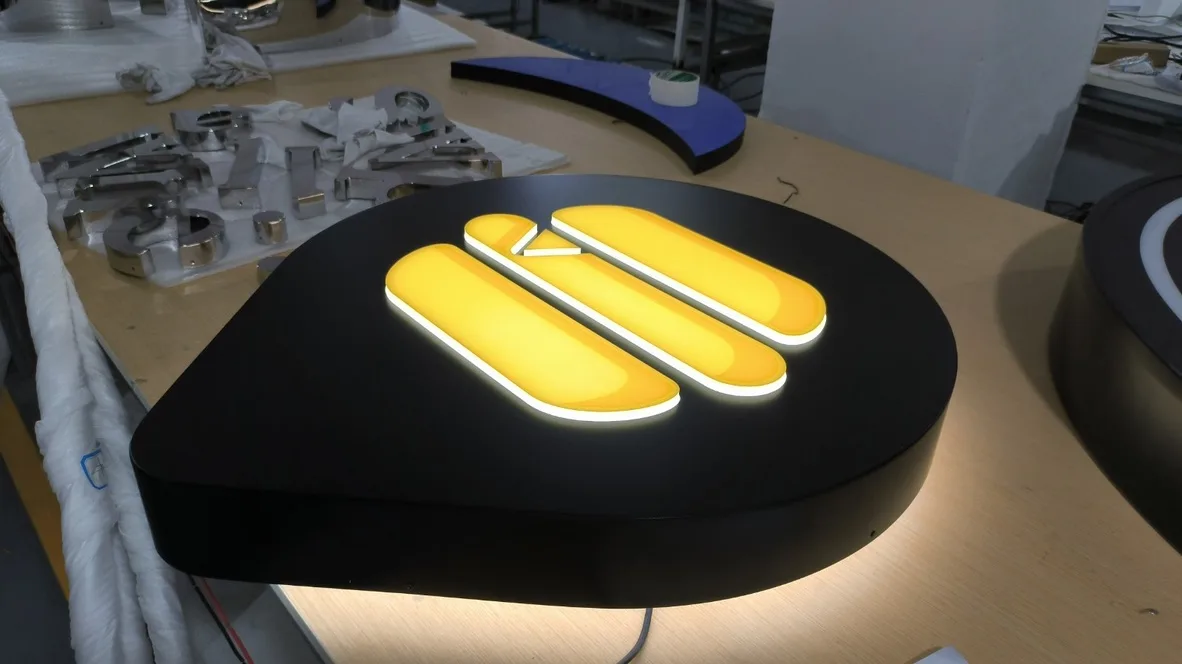
The gallery now focuses on printed parts, signage forms, lightbox details, prototype work and display components, so buyers can quickly understand when 3D printing makes sense beside laser and CNC cutting.
B2B applications
Use 3D printing where the part needs depth, curves, enclosed forms, custom geometry or a low-volume run that does not justify tooling.
Jigs, fixtures, checking gauges, drill guides, covers, guards, trial brackets and low-volume parts that help workshop teams move faster.
3D letters, logo forms, shallow lightbox elements, display features, sample parts, trade-show pieces and components that pair with acrylic or ACM.
Shape studies, fit checks, enclosure concepts, product samples and short-run parts before a buyer commits to tooling or machining.
Retail display details, decorative forms, custom hardware covers, templates, props and feature pieces that are hard to cut from flat sheet alone.
Low-volume batches, replacement parts, assembly aids and labelled internal tooling where repeatability matters more than consumer novelty.
Printed forms can combine with laser cut acrylic, CNC routed panels, printed faces, inserts, fasteners and finished assemblies.
Quote and dispatch expectations
The estimator is a starting point, not a promise that every file is production-ready. It keeps small jobs moving while protecting large, advanced-material and deadline-sensitive work.
Simple STL files can produce an immediate browser estimate when size, scale and material fit the pilot rules.
Many simple confirmed jobs can target roughly 48 hours to 3 business days before dispatch, depending on size, material, queue and quantity.
Advanced materials, big prints, support-heavy parts, tight-fit jobs, colour matching and production-critical work stay reviewed before price acceptance.
Send STL, 3MF, OBJ or STEP where available, plus intended size, material preference, quantity, finish expectation, colour and deadline.
Ready to quote
Cut-ready cutting jobs can use live instant pricing. Complex and custom work can still be reviewed by the team.